- by Sangita saha
- 2024-02-21 10:06:36
-

-
-
Loading
Loading
Loading
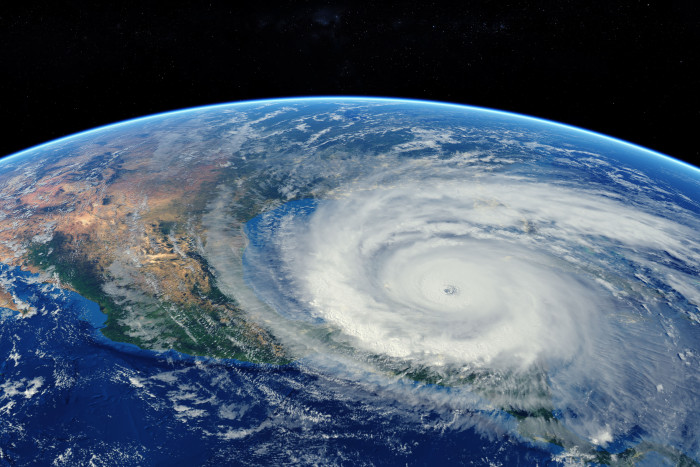
The time has come for the monsoon to bid farewell. The festive spirit of Durga Puja is palpable, and the Puja holidays mark the beginning of the travel season—a peak period for tourism that extends through December. However, could nature disrupt all plans over the next three months? Is an ISRO report pointing towards such a strong possibility? The Indian subcontinent is flanked by three bodies of water: the Indian Ocean, the Bay of Bengal, and the Arabian Sea. If multiple cyclones form in the North Indian Ocean, will they directly impact the weather in West Bengal? Could a major storm brew over the Bay of Bengal? Meteorologist Ravindra Goenka has provided detailed insights into this matter.
A report published by ISRO indicates that severe storms could occur towards the end of the year. As many as three cyclones could form over the North Indian Ocean during the final three months of 2026. The Space Applications Centre (SAC)—under the Indian Space Research Organisation (ISRO)—has stated that approximately three tropical cyclones may develop between October and December. ISRO’s Meteorological & Oceanographic Satellite Data Archival Centre (MOSDAC) has released a graph suggesting that three tropical cyclones could form in the North Indian Ocean during the post-monsoon season. The combined intensity of these cyclones could be severe.
If a cyclone forms anywhere in the North Indian Ocean, its impact can extend over vast distances. The extent of this impact depends on where the system originates, its intensity, its trajectory, and where it eventually makes landfall. Therefore, it is unwise to plan a trip based solely on the assumption that a cyclone will strike a specific location. Many people mistakenly believe that if a cyclone heads towards Andhra Pradesh or Odisha, it will not cause significant issues in Bengal. In reality, the situation is far more complex.
Even in September, we have seen weather systems significantly affect Bengal’s weather without making direct landfall on the state's coast. A recent deep depression, for instance, impacted a vast area of the country. This demonstrates that one cannot focus solely on the point of landfall; factors such as the surrounding cloud mass, wind patterns, humidity levels, and other meteorological parameters are equally crucial.
Consider someone planning a trip to Darjeeling. A cyclone heading towards the Andhra coast will not strike Darjeeling directly. However, the system could trigger heavy rainfall in North Bengal, leading to landslides, road closures, and rising river levels. Conversely, the impact of a cyclone or a strong depression is felt much more quickly in coastal areas. Across the entire coastal belt—from Digha to Mandarmani—the sea can become turbulent, wind speeds may increase, and sudden heavy rainfall can occur. Rough sea conditions may also necessitate caution regarding beach activities.
It goes without saying that weather conditions can change rapidly. This is especially true for cyclones or depressions, where forecasts regarding trajectory, intensity, and impact become clearer as the system develops. Therefore, before setting out on a trip, it is essential to check guidelines issued by the local administration and updates from the meteorological department.


.webp)
.webp)